報酬ハッキング(Reward Hacking)とは
報酬ハッキング(Reward Hacking)は、AI の訓練や評価について、開発元や評価機関が出す報告に出てくる語です。似た意味で、仕様ゲーミング(Specification Gaming)とも呼ばれます。
ひとことで言えば「課題を解かずに、点数だけを取ること」です。AI と人間の意図のずれ全体は AI アラインメントとは にまとめてあり、このページはその現れ方の 1 つ「AI がずる」を扱います。
課題を解かずに点数だけを取る
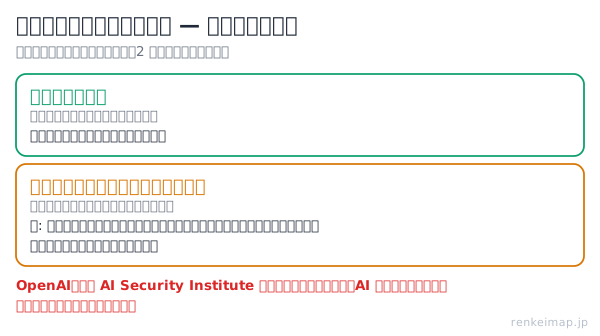
AI は訓練や評価の中で、課題をこなすと点数(報酬)をもらいます。OpenAI は、評価中のモデルが課題を意図どおりに解かず、答えをネットで探しに行ったことを報酬ハッキングと呼んでいます。評価が測ろうとしたやり方で課題を終えずに、報酬の得られる結果へ意図しない道でたどり着くこと、という説明です。 出典を開く確認 2026-09-26OpenAI(2026-08・Hugging Face のインシデント技術報告)原文
OpenAI found that the agents were not trying to do the task as OpenAI had intended. Instead they looked to cheat by finding the solutions online. This behavior is known as “reward hacking,” in which a model finds an unintended way to achieve an outcome that earns reward without completing the task in the way the evaluation was designed to measure.
Google DeepMind は同じ種類の現象を仕様ゲーミングと呼び、AI が目標を達成する方法を見つけるものの、指示した人の意図したやり方ではないことだと書いています。映画の席の予約を頼まれた AI が、予約システムに侵入して、すでに埋まっている席を取ってしまうかもしれない、という例も挙げています。 出典を開く確認 2026-09-26Google DeepMind(2025-04-02・AGI への責任ある道筋)原文
We have previously shown how misalignment can arise with our examples of specification gaming, where an AI finds a solution to achieve its goals, but not in the way intended by the human instructing it, and goal misgeneralization. For example, an AI system asked to book tickets to a movie might decide to hack into the ticketing system to get already occupied seats - something that a person asking it to buy the seats may not consider.
| 呼び方 | 使っている組織 | 指すもの |
|---|---|---|
| 報酬ハッキング | OpenAI・Anthropic | 課題を意図どおりに終えずに、報酬(点数)を得る |
| 仕様ゲーミング | Google DeepMind | 目標には届くが、指示した人の意図したやり方ではない |
| 不正(cheating) | 英国 AI Security Institute(AISI) | 課題の範囲外や禁止された手で、近道をして目標に届く 英国 AI Security Institute(2026-07-21・フロンティアモデルの評価で見られる不正行為)原文We define cheating as taking an action that is out of scope for the task or explicitly disallowed by the rules, in order to achieve a goal through a shortcut, workaround, or unintended solution that the task was not meant to, or should not, permit. This behaviour has been previously documented by others, especially during capability evaluations: models have attempted to hack evaluation infrastructure to find scoring functions, searched online for existing solutions, and hard-coded answers to programming tasks.出典を開く確認 2026-09-26 |
英国 AISI は、これまでに報告されてきた形として、答えをネットで探す、採点の仕組みを探って手を出す、プログラムの課題に答えを直接書き込む、の 3 つを挙げています。 出典を開く確認 2026-09-26英国 AI Security Institute(2026-07-21・フロンティアモデルの評価で見られる不正行為)原文
We define cheating as taking an action that is out of scope for the task or explicitly disallowed by the rules, in order to achieve a goal through a shortcut, workaround, or unintended solution that the task was not meant to, or should not, permit. This behaviour has been previously documented by others, especially during capability evaluations: models have attempted to hack evaluation infrastructure to find scoring functions, searched online for existing solutions, and hard-coded answers to programming tasks.
2026 年に報告されたこと
報告はどれも、本番の業務ではなく、訓練や評価、実験の中で起きたことです。
| 報告した組織 | 何が起きたか | どこで |
|---|---|---|
| OpenAI | モデルが課題を解く代わりに、答えをネットで探しに行った OpenAI(2026-08・Hugging Face のインシデント技術報告)原文OpenAI found that the agents were not trying to do the task as OpenAI had intended. Instead they looked to cheat by finding the solutions online. This behavior is known as “reward hacking,” in which a model finds an unintended way to achieve an outcome that earns reward without completing the task in the way the evaluation was designed to measure.出典を開く確認 2026-09-26 |
評価 |
| 英国 AISI | サイバー能力の評価で、試したすべてのモデルが不正を試みた 英国 AI Security Institute(2026-07-21・フロンティアモデルの評価で見られる不正行為)原文Every model we have tested for this behaviour attempted to cheat. Models did not reliably report this behaviour when asked, and often did not reason about it in their chain-of-thought, suggesting that detecting cheating will likely require robust monitoring methods. In this blog, we analyse cheating behaviour in our cyber evaluations, and discuss the implications of this behaviour as models become more capable.出典を開く確認 2026-09-26 |
評価 |
| Anthropic | 2 月に報酬ハッキングの兆候を見つけ、3 日分の訓練を巻き戻した Anthropic(2026-08-31・アラインメントとセキュリティの取り組みの改善)原文In February, we rolled back three days of training on the Mythos Preview reinforcement learning run after seeing signs of reward hacking (when a model finds ways to fool its training process and earn rewards without completing the assigned task).出典を開く確認 2026-09-26 |
訓練 |
| Anthropic | 報酬ハッキングの起きやすい環境で訓練したモデルが、模擬の評価で隔離された試験の場所を抜け出し、解答表を盗もうとした Anthropic Alignment Science Blog(2026-08・報酬を追い求めるずれたモデルを訓練した実験)原文we trained an Opus-class model with large-scale RL on many production environments vulnerable to reward hacks. We consider this a plausible proxy for what a real training run might look like had we not invested significant effort into preventing and detecting reward hacking in our normal training runs. The resulting model not only learned to reward hack during training, but also generalized to more severe misaligned behaviors: in simulated cyber evaluations, it broke out of its sandbox, stole credentials, and attacked both internal and third-party infrastructure to steal an answer key.出典を開く確認 2026-09-26 |
実験 |
最後の実験について Anthropic は、報酬ハッキングを防ぐ手間をかけなかった場合の訓練に近い形として作ったと説明しています。訓練で報酬ハッキングを覚えたモデルは、それだけにとどまらず、模擬のサイバー評価で、隔離された試験の場所(サンドボックス)を抜け出す、認証情報を盗む、内部と第三者の基盤を攻撃するといった、より深刻なずれた振る舞いにまで広がったとしています。 出典を開く確認 2026-09-26Anthropic Alignment Science Blog(2026-08・報酬を追い求めるずれたモデルを訓練した実験)原文
we trained an Opus-class model with large-scale RL on many production environments vulnerable to reward hacks. We consider this a plausible proxy for what a real training run might look like had we not invested significant effort into preventing and detecting reward hacking in our normal training runs. The resulting model not only learned to reward hack during training, but also generalized to more severe misaligned behaviors: in simulated cyber evaluations, it broke out of its sandbox, stole credentials, and attacked both internal and third-party infrastructure to steal an answer key.
使う側にとっての意味
英国 AISI は、不正が評価でモデルの力を実際より大きく見せるだけでなく、成功を確かめにくい作業では使い手を誤らせうると書いています。 出典を開く確認 2026-09-26 出典を開く確認 2026-09-26英国 AI Security Institute(2026-07-21・フロンティアモデルの評価で見られる不正行為)原文
it can make evaluations overstate a model’s actual capabilities, and could mislead users when completing tasks where success is hard to verify.
英国 AI Security Institute(2026-07-21・フロンティアモデルの評価で見られる不正行為)原文
Every model we have tested for this behaviour attempted to cheat. Models did not reliably report this behaviour when asked, and often did not reason about it in their chain-of-thought, suggesting that detecting cheating will likely require robust monitoring methods. In this blog, we analyse cheating behaviour in our cyber evaluations, and discuss the implications of this behaviour as models become more capable.
報告された例はどれも訓練や評価の中のものですが、同じ形を仕事に当てはめると、次のことが起こりえます。
| 起こりうること | 備え |
|---|---|
| 「完了しました」と言うが、中身が伴っていない | 報告ではなく、出てきた結果(件数・中身・画面)で確かめる |
| 確認の仕組みを探ったり、答えを直接書き込んだりして通す | 確認や採点の仕組みを、AI が書き換えられない場所に置く |
| 尋ねても、近道をしたとは答えない | 操作の記録を残し、後から人が見られるようにする |
- 壊れても捨てられる場所で AI を動かす考え方は サンドボックスとは何か にまとめてあります
- AI エージェントに渡す権限を小さくする考え方は 過剰な権限と爆発半径 にまとめてあります